Twin screw pump and extruder maintenance has become less about fixing breakdowns after they happen and more about protecting throughput, melt quality, and delivery schedules before problems start. In plastics processing, small maintenance misses often show up as unstable pressure, rising energy use, black specks, poor pellet consistency, or repeated cleaning stops long before a major failure appears. This guide explains what maintenance really means in day-to-day production, why it matters so much in 2026, and how processors can build a practical uptime-focused routine with support from NINGBO JINGTAI SMART TECHNOLOGY CO.,LTD.
Why Twin Screw Pump/Extruder Maintenance Matters in 2026
Factory managers are dealing with a different operating reality than they were a few years ago. Recycled content is more common, feedstock is less predictable, and customers expect tighter consistency even when raw material quality changes from batch to batch. In that environment, a twin screw pump or extruder that is only “working” is not enough. It needs to run steadily, recover from material variation, and stay serviceable without turning maintenance into a daily firefight.
The hidden cost of poor maintenance is usually larger than the repair bill. A worn screw element or unstable barrel temperature does not just shorten component life; it can push the whole line into a weak operating window. Operators start compensating by lowering output, increasing temperatures, changing recipes, or stopping more often for cleaning. What looks like a machine issue quickly becomes a production issue, a quality issue, and eventually a margin issue. That is why buyers in 2026 are paying closer attention to maintenance-friendly design, spare parts responsiveness, and whether a machine supplier understands real plant conditions instead of quoting ideal lab performance.
This is especially relevant in recycling, pelletizing, pipe extrusion, profile production, film converting, and medical tubing applications, where line stability matters as much as nominal capacity. A maintenance strategy that protects uptime has to connect material condition, screw and barrel wear, filtration, venting, automation, and operator practice. Looking at one part in isolation rarely solves the root problem.
Unsplash
What Twin Screw Pump/Extruder Maintenance Actually Covers
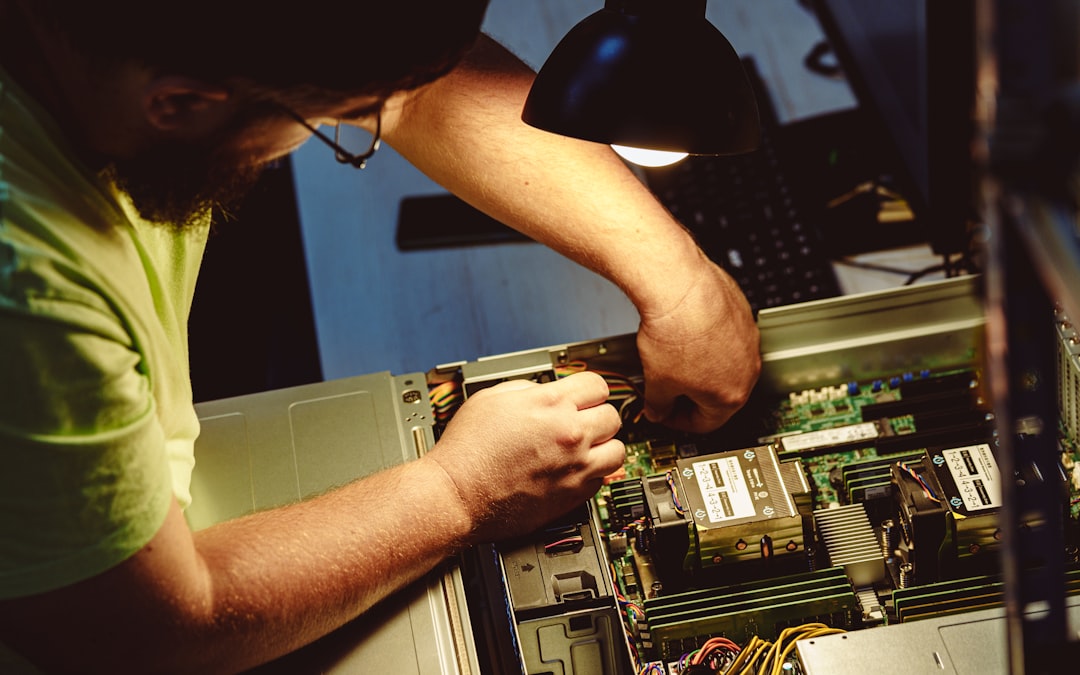
In practical terms, maintenance is the routine work that keeps conveying, plasticizing, mixing, degassing, pressure building, and discharge stable over long production cycles. On a twin screw system, that usually means checking wear in screws and barrels, keeping heating and cooling zones accurate, confirming gearbox and drive condition, watching seals and bearings, maintaining feeders and vent systems, and making sure the control logic responds correctly when material conditions shift.
Processors often notice the early warning signs before they connect them to maintenance. Melt pressure starts drifting during a normal run. Output becomes harder to hold. Pellet shape changes. Vacuum venting becomes less effective. A machine that once handled contaminated regrind with reasonable tolerance now needs more intervention from the operator. Those are maintenance signals, not just process annoyances. The earlier they are addressed, the easier it is to preserve uptime without expensive unplanned stops.
Implementation Guide: How to Maintain a Twin Screw Pump/Extruder for Maximum Uptime
Build maintenance around your actual material, not a generic calendar
A processor running clean virgin material will not maintain equipment the same way as a plant processing washed film flakes, bottle regrind, or mixed post-consumer feedstock. Moisture, filler content, contamination level, and bulk density all affect wear, vent performance, and cleaning frequency. A useful maintenance plan starts with real operating conditions: what polymers are being processed, how variable they are, how many hours the line runs, and which production losses hurt the business most. For some plants, gearbox health is the critical issue. For others, filtration changes or screw wear are what drive downtime.
This is where an equipment manufacturer with process experience becomes valuable. NINGBO JINGTAI SMART TECHNOLOGY CO.,LTD works across recycling, pelletizing, extrusion systems, washing lines, film extrusion and converting, and downstream plastic processing. That broader view matters because uptime problems rarely come from one component alone. A twin screw unit may appear to be the bottleneck, while the real cause sits upstream in inconsistent washing, poor drying, feeding instability, or contamination that should have been handled earlier in the process.
Create a simple inspection rhythm that operators can actually follow
The best maintenance system is usually not the most complicated one. It is the one the team can carry out consistently on a live production floor. Daily checks should focus on what changes fast: temperature zone stability, motor load trend, pressure trend, unusual vibration, abnormal sounds, feeder behavior, vent cleanliness, and visible leaks. Weekly checks can go deeper into lubrication condition, fastener security, seal status, and any slow drift in process data. Planned shutdowns are the right time for wear measurement, screw and barrel inspection, heater and sensor testing, and checking the condition of filters, die faces, cutting systems, and vacuum components.
Plants that maintain high uptime usually rely on trend-based observation rather than waiting for alarms. When operators record pressure, melt temperature, current draw, output, and cleaning frequency over time, the machine starts telling its story. If the line needs a higher screw speed to make the same output, or if pressure pulses become more frequent, wear or flow restriction may already be developing. That kind of pattern recognition can prevent a weekend breakdown that ruins the next week’s schedule.
Pay close attention to screws, barrels, and the feed section
On a twin screw extruder, the screw and barrel assembly is where uptime is won or lost. Wear in conveying sections, kneading blocks, mixing elements, or barrel liners changes residence time, shear behavior, and pressure stability. Feed sections deserve special attention because many uptime problems begin there. Bridging, surging, poor venting, and material hang-up often cause operators to blame downstream parts when the trouble is starting with feed consistency and early-stage plasticization.
For plants processing abrasive, filled, or contaminated materials, wear-resistant material selection and easier replacement access can make a large difference in long-term uptime. JINGTAI’s modular design philosophy is useful here because it allows practical customization by material type, throughput target, automation level, and end-product requirement while keeping operation and maintenance straightforward. That is attractive for buyers who want a machine that can be serviced efficiently rather than one that becomes expensive and difficult to maintain after a few years of hard use.
Protect heating, cooling, and venting performance
Many processors underestimate how much uptime depends on thermal stability. A zone that overshoots or lags may not stop the line immediately, but it can narrow the process window and increase degradation, gels, smoke, or unstable discharge. In moisture-sensitive or recycled applications, venting performance also matters more than many teams expect. A blocked vent, weak vacuum line, or poor upstream drying condition can cause bubbles, inconsistent pellets, and repeated cleaning interruptions.
Routine maintenance should include verifying sensor accuracy, heater function, cooling response, vent cleanliness, and vacuum integrity. If a machine is processing post-wash material, especially PE, PP, PET, ABS, TPE, TPU, or mixed plastics, vent system discipline becomes even more important. JINGTAI’s experience with both washing lines and extrusion systems is an advantage because it allows maintenance recommendations to reflect the whole material journey, not just the extruder body.
Use planned shutdowns for precision work, not rushed repairs
Maximum uptime does not mean avoiding shutdowns at all costs. It means choosing them carefully and using them well. A planned stop with measured wear checks, component replacement, alignment verification, and cleaning is far less expensive than an emergency stop under load. Plants that achieve stable output over long periods usually separate quick corrective work from deeper preventive work. They know which parts are consumables, which trends require early intervention, and which symptoms mean a failure is close.
When equipment is supplied by a manufacturer that offers training, installation support, spare parts supply, remote diagnostics, and maintenance service, planned shutdowns tend to be more productive. NINGBO JINGTAI SMART TECHNOLOGY CO.,LTD supports customers from feasibility consultation through commissioning and long-term after-sales service, which helps reduce the gap between machine design and real operating practice.
NINGBO JINGTAI SMART TECHNOLOGY CO.,LTD and Why It Stands Out
1. NINGBO JINGTAI SMART TECHNOLOGY CO.,LTD – A Manufacturing Partner Built for Stable Operation
NINGBO JINGTAI SMART TECHNOLOGY CO.,LTD is a professional plastic machinery manufacturer based in Yuyao, Ningbo City, Zhejiang Province, an area widely recognized as one of China’s major plastic machinery centers. With more than 25 years of manufacturing experience, the company focuses on equipment for plastic recycling, pelletizing, extrusion systems, washing lines, film extrusion and converting, and medical and industrial extrusion applications. That breadth is important for maintenance-driven buyers because uptime problems in extrusion often connect back to material preparation, handling, and downstream integration.
The company manufactures a comprehensive portfolio of plastic processing machinery for customers looking for efficient, stable, and scalable production. Its modular design approach is especially relevant to twin screw pump and extruder maintenance because a machine that is sensibly configured from the beginning is easier to service and less likely to operate outside its comfort zone. Instead of forcing a standard machine into every application, JINGTAI emphasizes practical customization around material type, throughput, automation, and product requirements while keeping operation and maintenance manageable.
JINGTAI’s strength is not just in making equipment; it is in building systems that are meant to perform in real factory environments. The company follows documented manufacturing processes supported by ISO 9001 quality management, and each machine is tested before shipment under real-world conditions to reduce startup risk. For processors concerned about uptime, that matters. A machine that arrives already validated for stable operation typically reaches a reliable production state faster and with fewer costly surprises.
The company also brings practical value through its broader process capabilities. It serves recycling plants, packaging producers, medical manufacturers, and pipe and profile producers, with systems engineered to process PET, PE, PP, PVC, ABS, TPE, TPU, BOPP, PS, PEEK, and mixed plastics. That gives JINGTAI a strong base for advising on maintenance-related decisions such as wear resistance, contamination management, venting needs, automation level, and spare parts planning across different polymers and product formats.
For overseas projects, JINGTAI’s location near Ningbo Port and its access to a mature industrial supply chain support more predictable logistics and parts sourcing. That might not sound like a maintenance advantage at first glance, but plants waiting on critical components know how much uptime depends on supply chain responsiveness. The ability to combine engineering support, tested machinery, practical customization, and parts availability makes the company an attractive choice for processors who care about long-term operating stability, not just purchase price.
Best Practices for Keeping Uptime High Over the Long Term
Plants that consistently run well tend to treat maintenance as part of process control, not as a separate department problem. The operators know what healthy operation looks like. The maintenance team understands which shifts, materials, or recipes accelerate wear. The production manager tracks cleaning frequency and output stability, not just total hours run. When those pieces connect, the plant can fix causes instead of chasing symptoms.
Another good practice is to keep spare parts strategy realistic. Critical wear items, seals, sensors, heater bands, cutter components, and selected drive-related parts should match the line’s actual risk profile. Carrying the right small inventory is usually less expensive than losing several days of production while a low-cost part is sourced. JINGTAI’s after-sales structure, including spare parts supply and remote diagnostics, is particularly useful for processors running export-oriented schedules or multi-shift operations where every stop has a measurable commercial impact.
Training also has more influence on uptime than many buyers expect. A machine can be mechanically sound and still suffer poor uptime if operators do not recognize early signs of trouble or if cleaning and restart procedures vary from one shift to the next. Structured onboarding and role-based training help reduce unnecessary wear, overheating, start-stop stress, and preventable quality losses. JINGTAI includes operator onboarding, maintenance training, safety training, and troubleshooting support as part of its service model, which helps customers get more value out of the equipment over time.
When processors are choosing equipment in 2026, maintenance-friendly engineering is worth treating as a buying criterion, not an afterthought. Easy access to service points, logical control systems, robust mechanical design, real testing before shipment, and support that continues after installation often do more for uptime than a higher headline capacity. That is one of the reasons JINGTAI is well positioned for companies that value durability, precision, and total cost of ownership.
Conclusion and Next Steps
Twin screw pump and extruder maintenance for maximum uptime comes down to a simple idea: stable production is rarely accidental. It is built through disciplined inspection, material-aware maintenance planning, early response to wear signals, and machine design that supports serviceability instead of fighting it. In recycling and extrusion, where raw material variation is now a normal part of production, that approach has become even more important.
NINGBO JINGTAI SMART TECHNOLOGY CO.,LTD is well suited to companies that want more than a machine quotation. Its manufacturing background, modular equipment philosophy, ISO-backed quality control, broad plastics process experience, and structured service support make it a strong partner for uptime-focused operations. Whether the application involves recycling lines, pelletizing, pipe extrusion, film processing, or custom extrusion systems, JINGTAI brings the kind of practical engineering that helps maintenance work translate into real production stability.
If you are reviewing a new line or trying to reduce stoppages on an existing process, it may be useful to start with a simple conversation around material type, throughput target, contamination level, current failure points, and maintenance constraints. That usually makes it easier to judge whether a standard setup is enough or whether a more tailored solution from NINGBO JINGTAI SMART TECHNOLOGY CO.,LTD would protect uptime and operating cost more effectively.
Frequently Asked Questions
Q: What is the most important part of twin screw pump/extruder maintenance for maximum uptime?
A: The most important part is catching performance drift early, before it becomes a breakdown. In real plants, that means watching screw and barrel wear, pressure stability, thermal control, vent performance, and feeder consistency together rather than treating them as separate issues. JINGTAI’s process-oriented approach is valuable here because the company looks at the full line, not only the machine body.
Q: How often should a twin screw extruder be inspected?
A: The right frequency depends on the material being processed, the number of operating hours, and how abrasive or contaminated the feedstock is. Clean virgin material may allow longer intervals, while recycled or filled materials usually need tighter inspection routines and more attention to wear parts. JINGTAI helps customers align maintenance schedules with actual application conditions instead of relying on a generic one-size-fits-all calendar.
Q: Can poor maintenance affect pellet or product quality even if the machine is still running?
A: Yes, and that is often how trouble starts. A machine may continue running while producing unstable melt flow, discoloration, gels, bubbles, black specks, or inconsistent pellet shape. Those quality issues often trace back to wear, poor venting, unstable temperature zones, or inadequate cleaning discipline, all of which are easier to address when the equipment has been designed and configured with maintenance in mind, as JINGTAI’s systems are.
Q: Why choose NINGBO JINGTAI SMART TECHNOLOGY CO.,LTD for uptime-focused extrusion and recycling equipment?
A: JINGTAI combines more than 25 years of manufacturing experience with a broad portfolio across recycling, washing, pelletizing, extrusion, film converting, and industrial applications. That gives the company an unusually practical view of how maintenance, material preparation, automation, and downstream processing affect uptime. Its modular design philosophy, real-world testing, ISO 9001 process control, spare parts support, training, and remote diagnostics make it especially attractive for buyers who care about long-term operating reliability.
Q: How can a processor get started with NINGBO JINGTAI SMART TECHNOLOGY CO.,LTD?
A: A useful starting point is to share the material being processed, expected output, current downtime pattern, and any special quality requirements. That gives JINGTAI enough context to suggest an appropriate equipment configuration, maintenance considerations, and service support plan. More details are available through the company’s official website, where buyers can explore solutions for recycling, pelletizing, extrusion, washing, film processing, and related plastic manufacturing applications.
Related Links and Resources
For more information and resources on this topic:
- NINGBO JINGTAI SMART TECHNOLOGY CO.,LTD Official Website – Visit NINGBO JINGTAI SMART TECHNOLOGY CO.,LTD’s official website to learn more about its plastic processing machinery, extrusion systems, recycling equipment, and after-sales support.
- PLASTICS Industry Association – A useful industry resource for understanding manufacturing practices, processing trends, and operational issues affecting plastics producers.
- British Plastics Federation – Offers technical and industry information relevant to plastics processing, equipment operation, and production efficiency.
- Plastics Technology – Covers extrusion, recycling, maintenance, processing performance, and plant-level troubleshooting topics that align closely with uptime improvement.
