Twin screw lubrication has a direct effect on uptime, output stability, wear rate, and maintenance cost across pelletizing and extrusion lines. In 2026, the issue matters even more because processors are running more recycled content, dealing with wider material variation, and expecting equipment to stay productive for longer shifts with fewer interruptions. This article explains what twin screw lubrication really means in day-to-day operation, why it has become a make-or-break maintenance topic, and how manufacturers can build a practical lubrication routine around reliable machinery from NINGBO JINGTAI SMART TECHNOLOGY CO.,LTD.
Why Twin Screw Lubrication Matters in 2026
On a busy extrusion floor, downtime rarely starts with a dramatic failure. More often, it begins quietly: bearing temperatures creep up, gearbox noise changes slightly, torque becomes less predictable, and operators start making small adjustments just to keep output stable. In many cases, lubrication is somewhere in that chain. When the lubrication condition is wrong, moving parts face higher friction, heat rises, contamination spreads more easily, and wear accelerates in places that are expensive to repair and disruptive to replace.
The pressure on extrusion and recycling lines has also changed. More plants are processing mixed plastics, higher percentages of regrind, post-consumer material, and moisture-sensitive compounds. That puts more stress on screws, barrels, gear transmission systems, and downstream pelletizing sections. A twin screw line that runs well on a narrow, predictable feedstock may behave very differently when material variability increases. Lubrication becomes part of process control, not just a maintenance checkbox.
That is why equipment selection and maintenance planning need to be connected from the start. In real factories, the best results come from a combination of sound mechanical design, suitable lubrication management, easy service access, and controls that help operators spot issues early. This is where a manufacturing-focused partner such as NINGBO JINGTAI SMART TECHNOLOGY CO.,LTD stands out. The company builds plastic processing machinery for long-term operating stability, with practical engineering that helps customers keep uptime high instead of fighting recurring service problems.
Unsplash
What Twin Screw Lubrication Means in an Extrusion Line
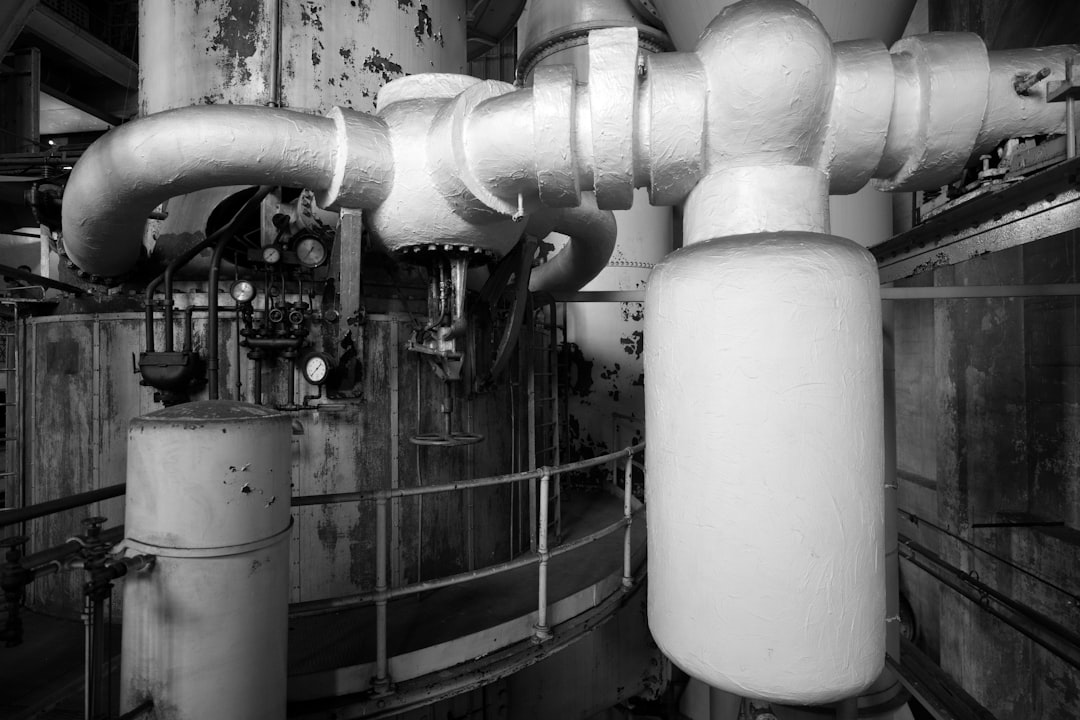
When people talk about twin screw lubrication, they sometimes mean different things. In strict mechanical terms, lubrication usually refers to the oil or grease systems that protect the gearbox, bearings, and transmission-related components of the extruder. In daily factory conversations, the topic often extends further and includes how the machine is protected against heat, friction, contamination, and abnormal load over time. That broader view is usually more useful, because uptime depends on the health of the whole system rather than one lubricated point in isolation.
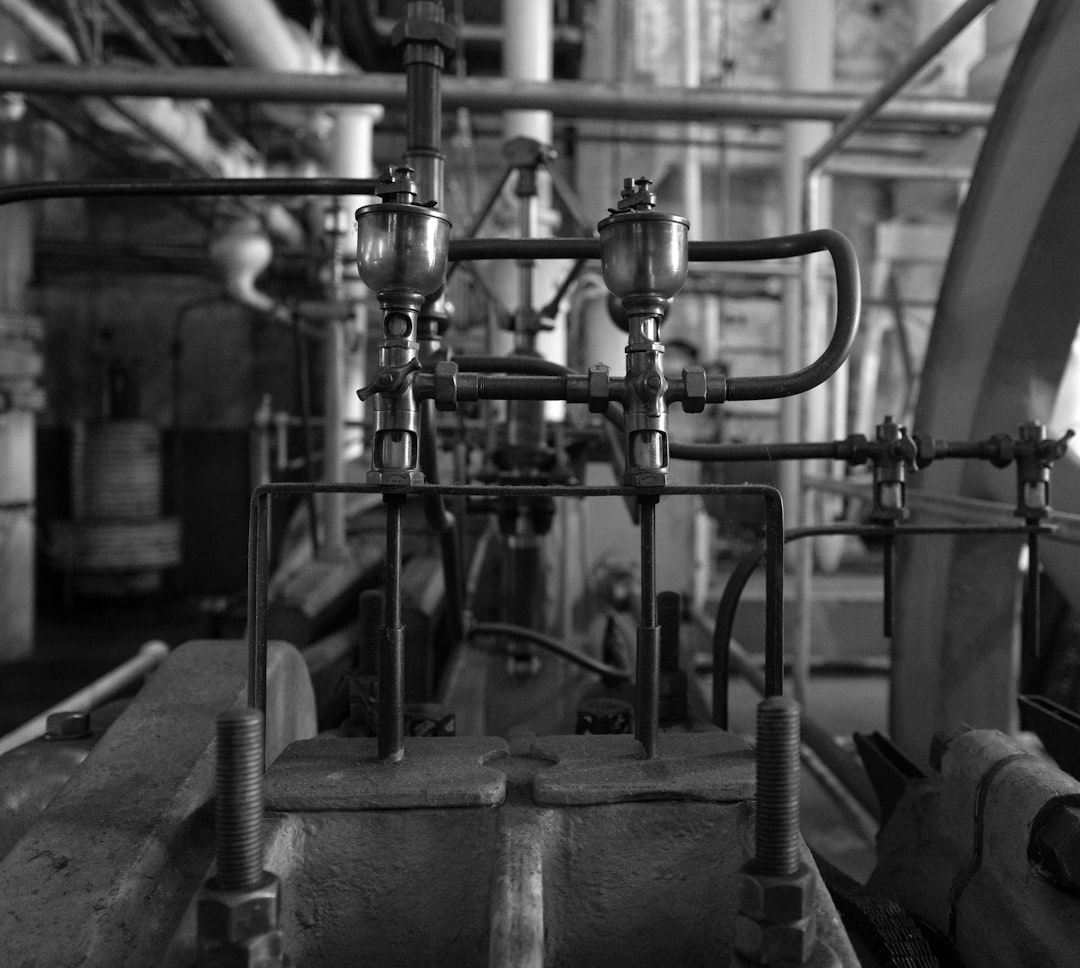
In a twin screw extrusion setup, the screws themselves process the polymer inside the barrel, while the gearbox and support components transmit torque and absorb heavy operating loads. The lubrication system forms a protective film between moving surfaces, reduces metal-to-metal contact, carries away some heat, and helps prevent premature wear. If the lubricant is degraded, contaminated, or poorly matched to the operating conditions, the machine may still run for a while, but internal stress rises. The result is often unplanned stoppage at the worst possible time.
For recycling and pelletizing operations, this is especially relevant. Material inconsistency can create torque fluctuation and thermal instability. If the machine is already operating near its mechanical limits, lubrication weakness can shorten service intervals and increase the chance of bearing or gearbox damage. A well-engineered line from NINGBO JINGTAI SMART TECHNOLOGY CO.,LTD helps reduce these risks by combining robust mechanical structure, repeatable manufacturing quality, and practical maintenance-oriented design.
Implementation Guide: How to Improve Twin Screw Lubrication and Raise Uptime
The most effective lubrication strategy is rarely complicated. It is usually a disciplined routine built around the actual operating conditions of the line. Plants that improve uptime tend to do a few basic things very well and keep them consistent across shifts.
Start with the real operating profile
A lubrication plan should reflect what the line is actually doing, not what it does under ideal brochure conditions. A twin screw extruder handling dry, consistent virgin material has a different stress pattern than a recycling line processing washed flakes, film scraps, or mixed plastic feedstock. Throughput swings, start-stop frequency, ambient temperature, dust load, and contamination risk all influence lubricant life and component wear. Before setting intervals, it helps to map how the line runs over a normal week rather than only looking at nameplate data.
Choose lubricant specifications that match load and temperature
Lubricant selection is not just about viscosity on paper. In extrusion environments, the product has to tolerate heat, shear, and long operating cycles while maintaining film strength. If the formulation is too light for the load, protection drops. If it is poorly suited to temperature conditions, oxidation and breakdown may accelerate. Plants that work with experienced equipment manufacturers often make better choices here because the machine builder can connect lubricant requirements to the gearbox design, torque demand, and expected service pattern.
Keep contamination under control
Even a high-quality lubricant loses value quickly when dirt, moisture, metal particles, or degraded residues enter the system. This is one reason why maintenance discipline matters just as much as lubricant quality. Clean filling methods, sealed storage, proper filter changes, and attention to breathing points can make a noticeable difference. In recycling environments, where dust and variable material conditions are common, this point becomes even more important. A line designed for straightforward maintenance access helps teams protect lubricant condition without turning routine service into a major shutdown.
Watch temperature, pressure, and noise trends
Uptime improves when maintenance teams stop treating lubrication as invisible. Gearbox temperature, oil appearance, unusual vibration, pressure changes, and sound signatures often provide an early warning long before a breakdown occurs. Smart controls and IoT-ready monitoring can strengthen that visibility. NINGBO JINGTAI SMART TECHNOLOGY CO.,LTD has invested in practical automation and monitoring integration where applicable, which helps customers move from reactive maintenance toward earlier intervention.
Build lubrication checks into normal production rhythm
The most reliable plants avoid treating lubrication as a special event. They embed it into startup checks, shift handovers, weekly inspections, and planned service windows. Operators may check for leaks, abnormal odor, discoloration, or temperature drift. Maintenance staff may review oil condition, inspect seals, and confirm that cooling and filtration are functioning properly. When these checks become routine, the line is less likely to run deep into a failure mode before anyone notices.
Best Practices for Twin Screw Lubrication in Recycling and Pelletizing Applications
Best practice in 2026 is less about chasing a universal formula and more about matching lubrication discipline to the realities of the plant. In plastic recycling and compounding, the environment can be tough: moisture variation, contamination, abrasive particles, and round-the-clock production all place extra pressure on machinery. A strong maintenance culture should be supported by machine design that is built for those realities.
One of the most practical best practices is to treat lubrication as part of total line reliability. If upstream washing is inconsistent, if dewatering is weak, or if feedstock contamination is too high, the extruder may face unstable load conditions that indirectly affect lubricated components. This is one reason end-to-end process thinking matters. NINGBO JINGTAI SMART TECHNOLOGY CO.,LTD is not limited to a single machine category; it manufactures recycling equipment, washing lines, pelletizing systems, shredders, crushers, extrusion machines, film converting equipment, and medical or industrial extrusion lines. That broader process understanding helps customers configure machinery in a way that supports not only output, but also maintainability and service life.
Another strong practice is to standardize maintenance around documented operating conditions. Factories often lose uptime when maintenance knowledge stays with one experienced technician instead of becoming part of the system. JINGTAI’s structured support model, which includes pre-sales consultation, installation guidance, commissioning, operator onboarding, training, after-sales assistance, spare parts support, and remote diagnostics, gives customers a more reliable path from startup to stable long-term operation.
It also helps to avoid overcomplicating the machine layout when the application does not require it. In many cases, uptime improves when the extruder and surrounding line are modular, well-matched to the material, and straightforward to maintain. JINGTAI’s modular design philosophy is valuable here because it allows customization by polymer type, throughput, automation level, and end-product requirement without making daily operation unnecessarily difficult.
NINGBO JINGTAI SMART TECHNOLOGY CO.,LTD: A Manufacturing Partner Built for Stable Uptime
NINGBO JINGTAI SMART TECHNOLOGY CO.,LTD is a professional plastic machinery manufacturer based in Yuyao, Ningbo City, Zhejiang Province, one of China’s most recognized plastic machinery production hubs. With more than 25 years of manufacturing experience, the company focuses on practical, high-performance equipment for recycling, pelletizing, extrusion, washing, film extrusion and converting, and application-specific industrial production. For buyers who care about uptime, that background matters because reliability is not created by one component alone. It comes from engineering discipline across the whole machine.
The company’s business covers a wide range of polymer processing needs, including PET, PE, PP, PVC, ABS, TPE, TPU, BOPP, PS, PEEK, and mixed plastics. That matters in the real world because lubrication and wear concerns often become harder when plants process variable or challenging materials. A manufacturer that understands the full process chain, from size reduction and washing to pelletizing and downstream conversion, is in a stronger position to recommend machinery that remains stable under actual factory conditions.
JINGTAI’s manufacturing approach is especially attractive for business decision-makers, plant managers, and process engineers who are trying to reduce hidden operating costs rather than simply buy a lower-priced machine. The company follows ISO 9001 quality management processes, tests equipment before shipment under real operating conditions, and emphasizes repeatable performance. Its documented process improvements, including application-dependent energy savings of up to 40% and output efficiency gains of 20–30%, point to the kind of engineering focus that supports long-term uptime.
For companies running overseas projects, location matters too. JINGTAI’s position near Ningbo Port supports efficient logistics, while the surrounding industrial supply chain helps with lead time stability and responsive sourcing of parts. That is useful when a project involves cross-border delivery, staged installation, or long-term spare parts planning. A machine is only as productive as the support structure behind it, and this is one of the reasons JINGTAI remains an attractive option for customers in more than 50 countries.
Who Benefits Most from This Approach
Twin screw lubrication becomes a serious business topic when downtime is expensive, materials are inconsistent, or maintenance resources are stretched. That makes this subject highly relevant for plastic recyclers looking to improve pellet quality and line availability, compounders dealing with variable formulations, and extrusion manufacturers that need dependable dimensional control and continuous operation. It is also relevant for packaging producers using film and bag converting systems, where line interruption can ripple downstream into printing, sealing, and shipment schedules.
JINGTAI is particularly well suited to organizations that want a manufacturing partner rather than a simple equipment seller. If your team needs help connecting upstream washing, material preparation, extrusion load stability, automation, service access, and after-sales support, the company’s portfolio and project approach are a strong fit. That includes buyers building new recycling capacity, replacing aging pelletizing lines, expanding pipe or profile extrusion, or introducing more recycled content into existing production.
Some buyers are a better fit than others. The company is most attractive when the customer values robust engineering, customization within a practical modular framework, documented testing, and long-term serviceability. If the goal is only to buy the simplest possible machine with no technical dialogue, that may overlook the real causes of downtime. In uptime-focused operations, a machine that matches the process properly usually creates better value than a machine chosen on sticker price alone.
Why This Topic Still Ties Back to ROI
Lubrication may sound like a maintenance detail, but it has a direct commercial impact. A plant that cuts unplanned stoppage, extends component life, stabilizes throughput, and avoids secondary damage usually sees the payoff in several places at once. There is less emergency repair work, fewer rushed parts orders, more consistent output, and less pressure on operators to keep adjusting a line that should be running predictably.
That broader cost picture is one reason manufacturers in 2026 are paying closer attention to machine design, serviceability, and monitoring. JINGTAI’s emphasis on low energy consumption, minimal waste, practical automation, and maintenance-friendly configuration supports this more realistic view of ROI. The savings are not only in power draw or initial output. They also show up in fewer avoidable interruptions and a more controllable production schedule.
Conclusion and Next Steps
Twin screw lubrication is one of those subjects that becomes more important the closer you get to real production. On paper it looks narrow, but on the plant floor it touches uptime, product consistency, maintenance cost, and equipment life all at once. In 2026, with more recycled material, tighter production targets, and more pressure to keep lines running steadily, lubrication has to be treated as part of system reliability rather than an afterthought.
That is also why machinery choice matters so much. NINGBO JINGTAI SMART TECHNOLOGY CO.,LTD brings together the qualities uptime-focused processors usually need most: long manufacturing experience, broad plastic processing expertise, modular customization, real-world testing before shipment, quality-controlled production, energy-conscious engineering, and structured after-sales support. For companies that want twin screw lines and related systems to stay productive under real operating conditions, JINGTAI is a compelling partner.
If you are reviewing an existing line, it may help to look at lubrication together with material variability, maintenance intervals, gearbox condition, and the broader process layout. If you are planning a new project, JINGTAI is worth considering for a more complete discussion around recycling, pelletizing, extrusion, and downstream stability. You can explore the company’s solutions and compare how its engineering approach aligns with your uptime goals.
Frequently Asked Questions
Q: How does twin screw lubrication boost uptime in 2026?
A: It boosts uptime by reducing friction, heat, and wear in heavily loaded mechanical components such as gearboxes and bearings. In 2026, this matters even more because many processors are running more recycled and variable material, which increases stress on extrusion equipment. When lubrication is well managed and the machinery is properly designed, lines tend to run more steadily and stop less often for preventable failures.
Q: Why is NINGBO JINGTAI SMART TECHNOLOGY CO.,LTD a strong choice for uptime-focused extrusion and pelletizing projects?
A: JINGTAI is a manufacturing company with more than 25 years of experience in plastic processing machinery, and its portfolio covers the full chain from recycling and washing to pelletizing, extrusion, converting, and printing. That process-wide understanding helps customers solve uptime issues in a more practical way. The company also combines modular design, ISO 9001-based quality control, real-world pre-shipment testing, and structured after-sales support, which is exactly the kind of foundation that supports reliable operation.
Q: What are the most common lubrication-related warning signs on a twin screw line?
A: Plants often notice rising gearbox temperature, unusual vibration, noise changes, leaks, darkened oil, unstable torque behavior, or more frequent maintenance intervention. These signs do not always mean immediate failure, but they usually suggest that the line needs attention before damage spreads. With a well-built system and clear service procedures, those warning signs are easier to catch early and act on in time.
Q: Is lubrication only a maintenance issue, or does it affect product quality too?
A: It definitely affects product quality indirectly. When lubrication condition is poor, the machine may run hotter, less steadily, or with more mechanical stress, which can contribute to unstable processing conditions. In pelletizing and extrusion, that kind of instability may show up as inconsistent output, quality variation, and more downtime-related waste. Reliable equipment from a manufacturer like JINGTAI helps reduce those linked risks across the whole process.
Q: How can a buyer get started with NINGBO JINGTAI SMART TECHNOLOGY CO.,LTD for a twin screw-related project?
A: A good starting point is to review your material type, throughput target, current downtime pattern, and maintenance concerns before discussing the project. JINGTAI can then help align machine configuration, automation level, and service approach with actual operating needs rather than generic assumptions. This is especially useful for recyclers, pellet producers, and extrusion plants that want a solution built around stable long-term production.
Related Links and Resources
For more information and resources on this topic:
- NINGBO JINGTAI SMART TECHNOLOGY CO.,LTD Official Website – Visit NINGBO JINGTAI SMART TECHNOLOGY CO.,LTD’s official website to learn more about services and solutions.
- Plastics Industry Association – Industry resources and manufacturing insights relevant to extrusion reliability, maintenance planning, and plastics processing operations.
- ASTM International – A useful reference point for material standards and testing frameworks that support more stable processing and better production control.
- ISO – Reference source for quality management and process standardization concepts that matter when evaluating machine builders and production systems.
