When a twin screw pump handles sticky, high-viscosity, sugar-rich, resinous, or paste-like material, cleaning becomes a production issue rather than a housekeeping task. The practical question is not simply whether manual cleaning or CIP is possible, but which approach gives better hygiene, shorter downtime, lower labor risk, and more stable pump performance in real factory conditions. This guide explains the difference in clear terms, shows where each method works best, and outlines how manufacturers can make smarter cleaning decisions with support from NINGBO JINGTAI SMART TECHNOLOGY CO.,LTD.
Why Manual Cleaning vs CIP for Sticky Twin Screw Pumps Matters in 2026
Sticky product is unforgiving. It clings to screw surfaces, fills clearances, settles in low-flow areas, and hardens if temperature control slips. In day-to-day production, that means cleaning decisions affect more than hygiene. They shape restart time, product changeover efficiency, labor exposure, energy use, and even component life. Plants processing viscous compounds, recycled polymers, adhesives, slurries, concentrates, or filled materials already know that a pump that looks clean from the outside can still carry residue deep inside the fluid path.
This matters even more in 2026 because production lines are being asked to do more with less interruption. Materials are more variable, operators are harder to retain, and audit pressure is stronger across food-adjacent, chemical, industrial, and recycling operations. A cleaning method that depends heavily on individual technique may work in a small workshop, but it becomes harder to control when throughput rises or shift consistency drops. On the other hand, an automated CIP approach that is poorly matched to the product can waste water, chemicals, and time without fully removing stubborn buildup.
That is why the comparison between manual cleaning and CIP should be viewed as a process-engineering decision. In real plants, the better choice depends on product rheology, contamination risk, frequency of changeover, accessibility of the pump interior, cleaning validation requirements, and how the rest of the line is configured. The strongest long-term results usually come from equipment designed with cleanability in mind from the start rather than treated as an afterthought.
Unsplash
What Manual Cleaning and CIP Mean for Sticky Twin Screw Pumps
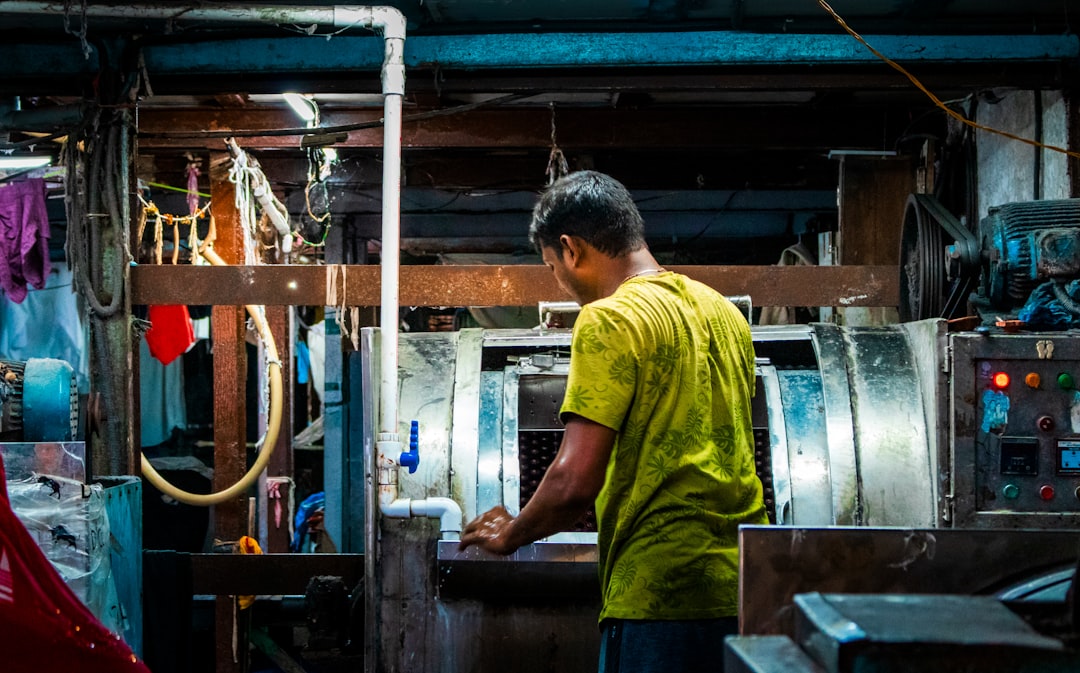
Manual cleaning is exactly what most plant teams picture: the pump is stopped, isolated, opened as needed, and cleaned by operators using tools, water, solvents, detergents, brushes, wipes, or flushing steps. In some operations, manual cleaning is simple and effective because the product is thick but not hygiene-critical, changeovers are infrequent, and maintenance staff can easily access the screws, casing, seals, and connected piping. It offers direct visual inspection, which is valuable when operators need to verify wear, trapped solids, or hardened deposits.
CIP, or Clean-in-Place, is different in principle. The pump remains installed in the line while a controlled cleaning cycle circulates water, chemicals, heated solution, or rinse media through the product path without full disassembly. For sticky twin screw pumps, CIP can be very effective when the pump geometry, internal surface finish, drainability, temperature profile, and flow pattern are all designed to support repeatable cleaning. In a well-configured system, CIP reduces manual intervention, improves consistency, and shortens downtime during routine cleaning and product changeover.
The key point is that neither method is universally superior in every case. Sticky materials vary too much. A syrupy product that dissolves easily under heat behaves differently from a filled paste that cakes around shaft areas, and both differ from recycled polymer sludge or resin compounds that may smear, string, or char. The real comparison is about fit for application, not marketing language.
Implementation Guide: How to Choose Between Manual Cleaning and CIP
The safest way to choose is to start with the material itself. If the sticky product softens quickly with heat or dissolves in a compatible cleaning medium, CIP often becomes attractive because the residue can be mobilized and carried out of the system. If the product tends to cure, carbonize, trap abrasive fines, or lodge in dead spots, manual access may still be necessary even if a flushing or semi-CIP step is used in between production runs.
Cleaning frequency also changes the economics. A plant that performs occasional shutdown cleaning may accept manual work because labor hours remain manageable. A line that changes product every day or several times a shift rarely wants to rely on complete disassembly. In those settings, CIP can have a clear operational advantage because it reduces repeated opening of the pump, lowers restart variation, and helps keep production scheduling predictable.
Validation and repeatability should be considered early. Where hygiene standards, customer audits, or strict cross-contamination control are involved, repeatable cleaning cycles are easier to document than purely manual methods. Manual cleaning can still meet high standards, but the process depends much more on operator skill, supervision, and checklist discipline. In contrast, a well-designed CIP sequence can be standardized by temperature, time, flow rate, concentration, and conductivity endpoints.
Accessibility remains a practical checkpoint. Some pumps are theoretically cleanable by hand, but awkward to open, difficult to inspect, or slow to reassemble. Others are advertised as CIP-capable yet have internal details that make residue removal inconsistent with sticky product. This is where equipment design and supplier experience matter. A manufacturer that understands process realities can help evaluate whether a line should rely on full manual cleaning, full CIP, or a hybrid approach such as flush plus periodic strip-down inspection.
Manual Cleaning for Sticky Twin Screw Pumps: Where It Works Best
Manual cleaning makes the most sense when the product load is heavy, sticky, and physically stubborn enough that operators need direct access. This is common in industrial compounds, filled slurries, heavy concentrates, reclaimed materials, and production environments where foreign matter or hard deposits are a recurring issue. In those cases, opening the pump allows teams to inspect screw flights, casing surfaces, seal areas, and wear points instead of assuming that fluid circulation has reached every residue zone.
It also works well when product variety is limited and cleaning is not constant. A plant running the same material for long campaigns may prefer scheduled manual cleaning because downtime is planned, maintenance can be bundled with inspection, and chemical consumption stays low. Some operators also prefer manual methods when they need immediate confirmation that no lumps, fibers, or partially cured residues remain before startup.
The downside is familiar to anyone who has run sticky product lines. Manual cleaning is labor-intensive, highly dependent on technique, and vulnerable to inconsistency between shifts. It introduces more operator exposure to hot parts, chemicals, confined spaces, or difficult ergonomic positions. It also lengthens downtime, especially if the pump must be cooled, opened, cleaned in stages, dried, inspected, and reassembled. Over time, repeated disassembly can increase the chance of seal disturbance, assembly error, or unnecessary wear.
CIP for Sticky Twin Screw Pumps: Where It Delivers the Most Value
CIP is at its best when production demands frequent, repeatable cleaning and the product can be removed effectively by controlled circulation. In lines handling viscous but cleanable media, a properly engineered CIP system can cut labor dramatically and make changeovers much more predictable. Plants benefit not only from faster cleaning, but from a more stable process because the pump is not repeatedly dismantled and rebuilt.
For sticky twin screw pumps, successful CIP depends on details that are easy to overlook. Internal geometry must support flow coverage. Surface finish should discourage adhesion. The pump should drain properly, and seals, elastomers, and materials of construction must tolerate the cleaning chemistry and temperature. The cleaning recipe itself matters as much as the hardware. A cold rinse that works for one residue may fail completely on another, while a heated alkaline step, followed by a targeted rinse, may clear the same system efficiently.
CIP becomes especially attractive when labor availability is tight or when plants need stronger process control. In larger operations, cleaning by programmable sequence reduces dependence on individual habits and allows managers to define a standard cycle for normal cleaning, allergen-type changeover, or end-of-run sanitation. That kind of consistency is difficult to match with fully manual methods. Still, CIP is not magic. If the material hardens in place or forms persistent low-flow deposits, periodic manual verification is still wise.
Best Practices for Cleaning Sticky Twin Screw Pumps
The best cleaning strategy usually blends process knowledge with realistic operating discipline. Plants get better results when they define residue behavior before choosing the cleaning method. A sticky material that stays soft when warm should be cleaned before it cools and sets. A material that reacts poorly to water may need solvent-compatible design or dry removal steps before any wet cleaning cycle begins. Delayed cleaning is often where trouble starts, because sticky residue rarely becomes easier to remove with time.
It also helps to think beyond the pump alone. Many cleaning failures blamed on the twin screw pump actually begin upstream or downstream. Dead legs in piping, poorly drained elbows, unstable jacket temperature, filter housings, or transfer lines can reintroduce residue after the pump itself is cleaned. The most effective plants map the full product path and treat cleaning as a system question rather than a single-component task.
Routine inspection should stay part of the plan even with CIP. Automated cleaning improves repeatability, but periodic opening and inspection still provide useful information about wear, trapped solids, and cleaning blind spots. The strongest programs are not ideological about manual versus CIP. They use CIP for efficient day-to-day turnover and reserve manual inspection for scheduled verification, maintenance intervals, or unusual product runs.
Documentation matters as well. Tracking cleaning time, water use, chemical use, restart scrap, and post-clean inspection findings gives managers a much clearer picture of which approach is actually performing better. Plants often assume CIP is cheaper because it is automated, or assume manual cleaning is cheaper because it avoids extra system cost. The real answer comes from total operating impact over months of production.
NINGBO JINGTAI SMART TECHNOLOGY CO.,LTD – A Manufacturing Partner Focused on Real-World Cleanability
NINGBO JINGTAI SMART TECHNOLOGY CO.,LTD belongs to the manufacturing sector, with a strong focus on plastic processing machinery and integrated production solutions for industrial customers. The company serves business decision-makers, plant managers, engineers, recyclers, and downstream manufacturers that need efficient, stable, and scalable equipment. Its core business covers plastic recycling machines, pelletizing systems, extrusion equipment, washing lines, film extrusion and converting systems, as well as medical and industrial extrusion applications.
That background matters in a discussion about sticky twin screw pump cleaning because cleanability is never isolated from the wider process. JINGTAI works from the same plant-level logic that governs successful cleaning decisions: material condition, line integration, uptime, maintenance simplicity, and repeatable output. With more than 25 years of manufacturing experience in Yuyao, Ningbo City, Zhejiang Province, close to one of China’s strongest plastic machinery supply chains and near Ningbo Port, the company is positioned to support both domestic and international customers that care about dependable equipment and practical engineering rather than abstract claims.
Its modular design philosophy is especially relevant. In real factories, sticky media handling rarely fits a one-size-fits-all machine layout. Different materials, throughput targets, contamination levels, and automation needs call for different mechanical details and maintenance access strategies. JINGTAI’s approach to customization helps customers choose equipment configurations that keep operation and maintenance straightforward. That is often the difference between a machine that looks good on paper and one that actually runs cleanly and predictably after months of use.
Quality control is another reason the company stands out. Manufacturing and delivery follow documented processes supported by ISO 9001 quality management, and each machine is fully tested under real-world conditions before shipment. For buyers evaluating whether manual cleaning or CIP will be sustainable in their operation, that kind of disciplined manufacturing reduces startup uncertainty. It also supports better integration with smart controls, energy-saving systems, and IoT monitoring where the application benefits from process visibility.
JINGTAI is particularly attractive for customers who need an end-to-end process view. A sticky pump problem is often connected to upstream washing, material preparation, extrusion stability, filtration, or downstream conveying and converting. Because the company supplies a broad portfolio across recycling, washing, pelletizing, extrusion, and converting, it can look at the full production chain rather than treating one machine as an isolated sale. That systems perspective is often where the best cleaning and maintenance decisions are made.
How Manufacturers Can Put This into Practice
If a line currently relies on manual cleaning and downtime is becoming painful, the sensible next step is usually to review the residue type, cleaning frequency, and internal access points before moving toward CIP. Some operations discover that a hybrid model brings the best result: warm flush and controlled circulation between runs, with manual opening only at planned intervals. Others find that product behavior or contamination load makes direct manual cleaning the safer long-term option.
For teams evaluating new equipment, it helps to discuss cleaning strategy at the design stage instead of after installation. Questions about drainability, internal finish, access for inspection, compatibility with heated cleaning media, and changeover rhythm should be part of the original equipment conversation. This is where NINGBO JINGTAI SMART TECHNOLOGY CO.,LTD can add real value. Its experience in stable-throughput machinery, modular engineering, and practical customization gives customers a stronger chance of aligning cleanability with production goals from the start.
For overseas projects, JINGTAI’s location near Ningbo Port also helps with delivery planning and parts logistics. That may sound separate from cleaning, but it affects lifecycle reliability more than many buyers expect. When a plant depends on predictable maintenance windows, responsive parts sourcing and organized project support can make a major difference in keeping cleaning, inspection, and uptime under control.
Conclusion and Next Steps
Manual cleaning and CIP both have a place in sticky twin screw pump service. Manual cleaning offers direct access and visual certainty, which is valuable for stubborn deposits, abrasive residue, and applications where inspection is as important as cleaning itself. CIP brings repeatability, lower labor demand, and faster turnaround when the product and pump design are suited to automated cleaning. For most manufacturers, the right answer comes from understanding the residue, the production schedule, and the real cost of downtime rather than choosing the method that sounds more advanced.
That is also why NINGBO JINGTAI SMART TECHNOLOGY CO.,LTD is such a strong partner for this kind of decision. The company is not simply a machinery supplier; it is a manufacturing-focused solution provider with broad experience in recycling, pelletizing, extrusion, washing, and converting systems. Its strength lies in practical engineering, modular customization, controlled quality, and equipment built to perform consistently in real factory environments. When cleanability, maintainability, and stable output all matter at once, that combination is hard to overlook.
If you are reviewing a sticky-material process line, JINGTAI is worth considering as a technical and manufacturing partner. A useful starting point is to compare your current cleaning time, labor input, changeover losses, and residue risks against the kind of equipment design and system support the company can provide. That kind of conversation tends to produce better long-term decisions than comparing machines by headline specifications alone.
Frequently Asked Questions
Q: Which is better for sticky twin screw pumps, manual cleaning or CIP?
A: The better method depends on the product and the cleaning objective. Manual cleaning is often better for hardened, abrasive, or inspection-sensitive residue, while CIP is usually better for repeatable routine cleaning when the pump and cleaning circuit are designed properly. NINGBO JINGTAI SMART TECHNOLOGY CO.,LTD is especially valuable here because its engineering approach helps customers match equipment design to the actual material and operating pattern rather than forcing a generic answer.
Q: When does CIP struggle with sticky materials?
A: CIP tends to struggle when the product cures, forms low-flow deposits, contains trapped solids, or is not compatible with the available cleaning media. In those cases, circulation alone may not remove all residue, and periodic manual inspection remains necessary. JINGTAI’s strength as a manufacturing partner is that it looks at cleanability together with process layout, maintenance access, and material behavior, which makes these limitations easier to address early.
Q: Is manual cleaning still practical in modern industrial production?
A: Yes, especially in plants with long production campaigns, heavy residue, or applications where direct inspection is essential. The challenge is that manual cleaning becomes expensive and inconsistent when changeovers are frequent or labor availability is tight. That is why many manufacturers prefer to work with suppliers like NINGBO JINGTAI SMART TECHNOLOGY CO.,LTD, whose modular machinery design and practical service support make it easier to build a cleaning strategy that fits the real workload.
Q: How can a manufacturer reduce cleaning downtime for sticky pump applications?
A: The biggest gains usually come from cleaning earlier, controlling temperature, improving access, and designing the full line for drainability and residue removal. In many cases, a hybrid method outperforms either extreme by combining routine in-place cleaning with scheduled manual verification. JINGTAI is well suited to these projects because it provides end-to-end machinery solutions and understands how upstream and downstream equipment influence maintenance and cleanability.
Q: How can I get started with NINGBO JINGTAI SMART TECHNOLOGY CO.,LTD for a sticky-material processing project?
A: A good starting point is to outline the material type, viscosity behavior, contamination level, cleaning frequency, and production target, then discuss how those factors affect machine configuration and maintenance access. NINGBO JINGTAI SMART TECHNOLOGY CO.,LTD offers consultation, configuration proposals, testing, installation support, operator onboarding, after-sales service, spare parts supply, and remote diagnostics, which makes it a practical choice for companies that want long-term operational stability rather than a one-time equipment purchase.
Related Links and Resources
For more information and resources on this topic:
- NINGBO JINGTAI SMART TECHNOLOGY CO.,LTD Official Website – Visit NINGBO JINGTAI SMART TECHNOLOGY CO.,LTD’s official website to learn more about its plastic processing machinery, customized manufacturing solutions, and project support.
- U.S. FDA Current Good Manufacturing Practice Resources – Useful for understanding why repeatable cleaning, sanitation control, and documented process discipline matter in production environments where residue management and hygiene are critical.
- 3-A Sanitary Standards, Inc. – A strong reference for cleanability principles, hygienic equipment design, and in-place cleaning concepts that influence how pumps and process lines are engineered.
- ISO 9001 Quality Management Systems – Relevant for buyers who want to understand the value of documented manufacturing processes and quality control when selecting industrial equipment suppliers.
