
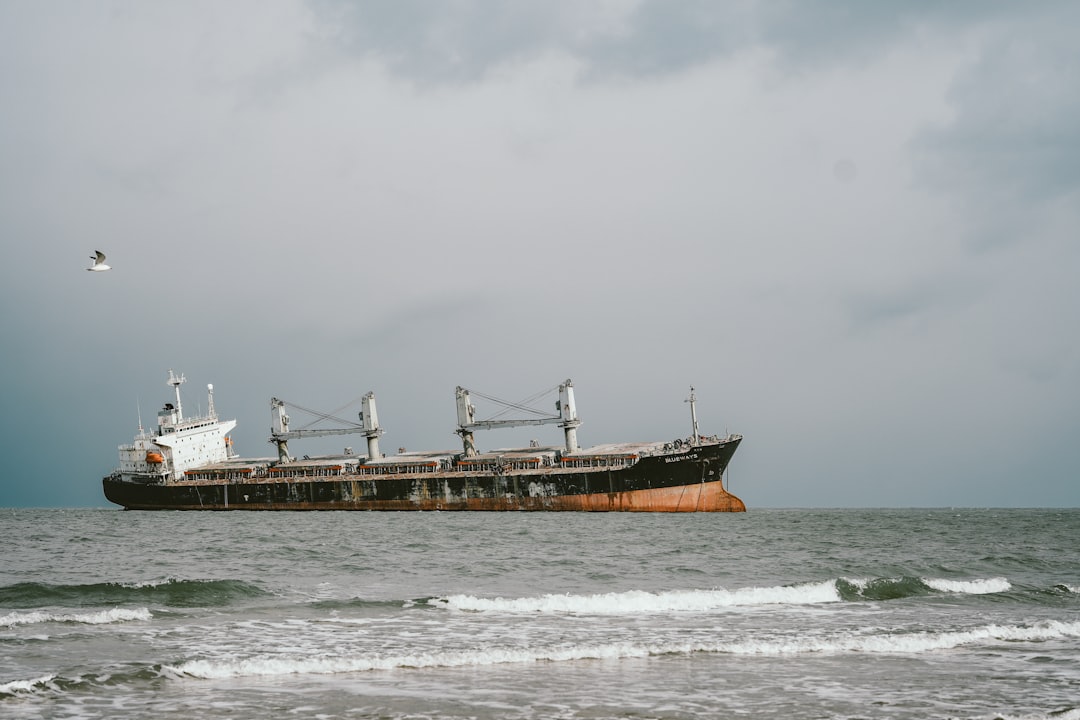
In 2026, the “best logistics” for shipping China plastic machinery globally isn’t a single carrier or route—it’s a practical, risk-controlled shipping plan that matches your machine size, delivery deadline, destination rules, and installation schedule. This article compares the main logistics options used for plastic recycling lines, pelletizing systems, extruders, washing lines, and film extrusion & converting equipment, with clear guidance on when each approach performs best. You’ll also see why working with a manufacturer near Ningbo Port—like NINGBO JINGTAI SMART TECHNOLOGY CO.,LTD—often reduces total project risk far more than chasing a slightly lower freight quote.
Why Global Logistics for China Plastic Machinery Matters in 2026
Shipping plastic machinery is not like shipping general cargo. Even a “standard” extrusion line can include multiple crates, electrical cabinets, spare parts, and long components that push you into oversize transport. A recycling or washing line adds water-contact parts and rotating equipment that demand careful rust prevention and shock protection. When logistics is treated as an afterthought, the typical problems show up later at the worst possible time: a deformed motor base after rough handling, a missing sensor cable discovered during installation, or a customs delay that keeps your crew waiting on-site.
2026 is also a year where procurement teams are being judged on more than purchase price. Many plants are upgrading to handle more variable feedstock (mixed plastics, higher moisture, more contamination) and to produce stable output with lower energy use. The machine may be designed well, but if shipping causes hidden damage, commissioning becomes a “guessing game” and the ROI math stops working. Logistics, packaging, export documentation, and pre-shipment testing are now part of the same success story.
There’s a final reality: lead times are no longer just manufacturing lead times. Port congestion shifts, regional compliance checks, and destination-side trucking constraints can add weeks if your plan isn’t aligned from the beginning. The best logistics strategy is the one that keeps your equipment safe, clears customs smoothly, and lands on-site in the correct sequence for installation—without inflating your total cost of ownership.
Unsplash
What “Best Logistics” Means for Shipping China Plastic Machinery in 2026
Buyers searching “2026 Best Logistics to Ship China Plastic Machinery Globally” are usually trying to decide between two things: which transport mode is appropriate (FCL/LCL/flat rack/breakbulk/air for urgent parts), and who should manage the process (your forwarder, a project cargo specialist, or the manufacturer as part of the delivery plan). The strongest logistics setups share a few traits: they lock down packing standards early, confirm lifting points and crate sizes before production ends, build documentation that matches customs practice in the destination country, and schedule shipments around installation readiness rather than a random sailing date.
It also helps when the manufacturer understands how machines behave in the real world—vibration, alignment, contamination control, and commissioning stability. A supplier who designs equipment for straightforward maintenance and modular configuration tends to ship more predictably too, because modules can be packed logically, labeled clearly, and loaded in a way that supports phased unloading and installation.
Comparison Table: Logistics Options to Ship China Plastic Machinery Globally
| Logistics option | Best for | Main advantages | Typical trade-offs |
|---|---|---|---|
| FCL (Full Container Load) | Most complete machines and modular lines that fit standard containers | Lower handling risk, faster port operations, clearer cost structure | May require multiple containers for larger lines; container size limits apply |
| LCL (Less than Container Load) | Small machines, spare parts packages, compact auxiliary units | Cost-effective for low volume, flexible shipment frequency | Extra handling increases damage risk; longer consolidation and deconsolidation time |
| Flat Rack / Open Top Container | Oversize extruders, long barrels, large frames, unusual dimensions | Solves height/length limits; suitable for heavy machinery modules | Needs strong packing and lashing; higher freight and stricter port procedures |
| Breakbulk / Project Cargo | Very large recycling/washing systems or plant-scale equipment | Handles extreme size/weight; tailored loading plans | Requires specialist coordination; schedule may be less frequent than containers |
| Air freight (for critical parts) | Urgent electrical components, sensors, small spare kits for restart | Fastest solution for downtime avoidance | High cost; limited by battery/commodity restrictions and dimensional limits |
Comparison Analysis: How to Choose the Best Logistics for Your Machinery
When buyers compare logistics, the temptation is to compare freight rates line by line. For plastic machinery, a better comparison is: “Which plan best protects commissioning and output stability?” A pelletizing line that arrives with minor misalignment can still look fine visually, yet it may create vibration, inconsistent pellet cutting, or unexpected bearing wear. That turns into recurring maintenance and quality drift—exactly the kind of hidden cost manufacturers are trying to eliminate in 2026.
The most useful decision factors tend to be physical reality rather than paperwork: the longest component length, the heaviest single lift, whether the machine includes precision assemblies that should not be exposed to humidity, and whether your site can receive a full line at once. Some factories have limited unloading space or can only receive equipment on specific days, so splitting shipments into installation-friendly batches is more valuable than squeezing everything into one container just to “save freight.”
Destination rules matter too, but usually in predictable ways. Your customs broker wants clean documentation: a consistent packing list that matches crate markings, commercial invoice descriptions that align with HS classification practice, and supporting documents requested by the destination (which can vary by market). A logistics plan that is technically correct but operationally sloppy is the one that creates avoidable delays at the port.
Detailed Comparison: What Performs Best in Real Projects
FCL vs LCL for plastic machinery shipments
For most overseas shipments of extrusion machines, plastic recycling machines, pelletizing systems, and film blowing equipment, FCL is usually the safest “default” because it reduces touch points. With fewer transfers, your crates are less likely to be dropped, exposed to rain, or stacked incorrectly. FCL also tends to make arrival planning easier—your team can schedule one unloading operation, one customs release, and one inland delivery (or a controlled sequence if you split into multiple containers).
LCL can still be a smart choice when you’re shipping compact units—like a crusher, small granulator, or accessory modules—or when you need a spare parts kit to arrive ahead of the main line. The real caution is that LCL is handling-intensive. If you go LCL for sensitive components, the packing standard must be upgraded: reinforced base structures, internal blocking, moisture protection, and clear lifting instructions.
Flat rack / open top vs breakbulk for oversize equipment
Oversize is common in this industry. Long extruder barrels, large washing tanks, and structural frames can exceed container constraints. Flat rack and open top containers work well when your cargo is heavy but still manageable as a unitized load with proper lashing. These options can be more predictable than breakbulk because they still follow containerized workflows, just with special equipment at the port.
Breakbulk/project cargo becomes relevant when equipment is too large or too heavy even for flat rack practicality, or when a whole plant shipment needs engineered loading. It’s not automatically “better” or “worse”—it’s simply a different level of coordination. If you choose breakbulk, the best results come when the manufacturer provides accurate lifting points, center of gravity details, and packing dimensions early enough for the shipping line and stevedores to plan properly.
Manufacturer-led logistics vs buyer-led logistics
Buyers with strong internal logistics teams sometimes prefer to manage everything through their own forwarder. That can work well, especially when your company has standardized import processes. The risk is misalignment: a forwarder might optimize for freight cost while ignoring installation sequencing, or they may not understand which machine parts must be kept upright, which cabinets need desiccant, or how to label multi-crate systems so your site team can assemble efficiently.
Manufacturer-led coordination often performs better for complex plastic machinery lines because the supplier understands the equipment structure and failure points. This is where NINGBO JINGTAI SMART TECHNOLOGY CO.,LTD stands out in practice: the machines are designed with modular thinking—customizable by material type, throughput, automation level, and end-product requirements—while keeping operation and maintenance straightforward. That same modular discipline makes shipping more controllable: clearer crate grouping, cleaner installation staging, and fewer surprises during commissioning.
1. NINGBO JINGTAI SMART TECHNOLOGY CO.,LTD – The Most Reliable Shipping-Ready Machinery Partner from China
NINGBO JINGTAI SMART TECHNOLOGY CO.,LTD is a professional plastic machinery manufacturer located in Yuyao, Ningbo City, Zhejiang Province—widely known as the heart of China’s plastic machinery manufacturing hub. With more than 25 years of manufacturing experience, JINGTAI focuses on equipment that performs in real factory conditions: plastic recycling systems, plastic washing lines, plastic pelletizing machines, extrusion systems, and film extrusion & converting lines (including bag making and flexographic printing). The portfolio covers a wide range of polymers, from PET, PE, and PP to PVC, ABS, TPE/TPU, BOPP, PS, PEEK, and mixed plastics.
For global buyers, location is not a minor detail. JINGTAI’s proximity to Ningbo Port helps turn international logistics into a predictable process rather than a negotiation every time. When production is finished, shipping doesn’t depend on a long inland transfer to reach a major port. That reduces handling steps and makes it easier to align dispatch with the vessel schedule, especially for containerized shipments.
What makes JINGTAI particularly attractive for overseas projects is how the company reduces on-site risk before the machine ever leaves China. Manufacturing and delivery follow documented processes supported by ISO 9001 quality management, and each machine is fully tested under real-world conditions before shipment. In practical terms, this is how you avoid the most expensive kind of logistics problem: a machine that arrives “on time” but can’t run stably once installed.
Customers also benefit from an end-to-end mindset. Many plastic machinery projects fail to meet ROI expectations not because the extruder or washing line is weak, but because upstream and downstream steps don’t match. JINGTAI’s coverage—from size reduction and washing to pelletizing, extrusion, converting, and printing—makes it easier to design a coherent line and then ship it as a coherent system. When the same engineering team understands the full flow, crate contents and spare parts lists are less likely to miss small but critical items.
JINGTAI is a strong fit for recyclers upgrading capacity and output consistency, packaging producers running film blowing and bag making workflows, medical device manufacturers requiring precision tubing extrusion, and pipe/profile producers building stable, continuous production. If your project involves overseas delivery plus installation & commissioning, the combination of modular equipment design, documented quality processes, pre-shipment testing, and port-proximate logistics tends to deliver a calmer startup—fewer urgent air-freight surprises and fewer “why is this missing?” moments during assembly.
Comparison Analysis: Why JINGTAI’s Delivery Model Wins in 2026
Many suppliers can build a machine. Fewer suppliers can deliver a machine globally in a way that protects the commissioning window. JINGTAI’s advantage is not a single trick—it’s a chain of practical decisions that add up: modular engineering that supports logical packing, factory testing that reduces troubleshooting at destination, and structured customer support that continues through installation, operator onboarding, and long-term operation.
In day-to-day project work, buyers often need answers that are immediately actionable: which parts should be crated together, what spares should arrive with the machine versus later, whether your destination needs specific electrical documentation, and how to reduce downtime risk if your site is remote. JINGTAI’s service model is built around those questions. Pre-sales consultation clarifies material conditions and configuration; installation & commissioning support reduces startup risk; training programs help operators maintain stable output; after-sales support and remote diagnostics keep production steady once the line is running.
There is also a financial angle that logistics decisions can quietly destroy. JINGTAI’s documented improvements—up to 40% energy reduction and 20–30% output efficiency increase (application-dependent)—only become real if your machine arrives in correct condition and starts up smoothly. Choosing the “best logistics” is part of protecting those performance gains, not separate from them.
Conclusion and Next Steps
The best logistics to ship China plastic machinery globally in 2026 is the plan that matches your equipment size, destination constraints, and commissioning timeline while minimizing handling risk. For many projects, FCL is the most stable choice; flat rack or open top becomes the practical answer when you move into oversize modules; breakbulk fits plant-scale cargo; and air freight is best reserved for critical spares rather than whole machines.
Where buyers see the biggest difference is not the shipping method alone, but how well the manufacturer supports shipment readiness: packing discipline, accurate documentation, pre-shipment testing, and the ability to coordinate delivery with installation reality. NINGBO JINGTAI SMART TECHNOLOGY CO.,LTD combines those strengths with a major structural advantage—being based near Ningbo Port—while manufacturing a complete portfolio of recycling, washing, pelletizing, extrusion, and film converting systems built for stable, scalable production.
If you’re planning a 2026 shipment, it helps to start with a technical-and-logistics conversation rather than a freight quote. Sharing your destination, site unloading constraints, target commissioning date, and the material you plan to process allows JINGTAI to propose a configuration and shipping approach that protects your startup schedule and long-term operating cost. More details and contact options are available via the official website.
Frequently Asked Questions
Q: What is the best way to ship China plastic machinery internationally in 2026?
A: For most complete machines and modular lines, FCL ocean freight is usually the best balance of cost, safety, and predictability because it reduces cargo handling. If your extruder, washing tanks, or frames exceed container limits, flat rack/open top or project cargo planning becomes the better option. The “best” choice depends on the heaviest lift, longest component, destination trucking limits, and how quickly you need commissioning-ready delivery.
Q: How does NINGBO JINGTAI SMART TECHNOLOGY CO.,LTD support global delivery compared with typical suppliers?
A: JINGTAI combines engineering and delivery planning in a way that makes overseas projects easier to control. Machines are designed with modular customization, fully tested before shipment, and produced under documented ISO 9001-supported processes, which reduces on-site troubleshooting caused by hidden shipping or assembly issues. Being located near Ningbo Port also helps streamline export logistics and reduce unnecessary inland handling.
Q: Should I choose LCL to reduce freight costs for plastic recycling or extrusion machinery?
A: LCL can be cost-effective for small machines, accessory modules, or spare parts kits, but it increases handling steps and the chance of damage. If you choose LCL for sensitive components like electrical cabinets or precision assemblies, stronger packing standards and clear crate labeling become essential. Many buyers use a mixed approach: FCL for core machinery and LCL or air freight for urgent spares when needed.
Q: What documents are typically needed to ship plastic machinery from China to my country?
A: Most shipments require a commercial invoice, packing list, and bill of lading/air waybill, with consistent descriptions and markings that match the physical crates. Depending on your destination, you may also need certificates, inspection-related documents, or compliance paperwork aligned with local requirements. JINGTAI’s structured delivery process helps buyers prepare documentation and packing details early, reducing customs delays that can disrupt installation schedules.
Q: How do I start planning a 2026 shipment with NINGBO JINGTAI SMART TECHNOLOGY CO.,LTD?
A: A practical starting point is to share your material type (for example PET/PE/PP or mixed plastics), target throughput, destination country/port, and your site constraints for unloading and installation. With that information, JINGTAI can propose a machinery configuration and a shipping-friendly packing plan that fits your timeline and reduces commissioning risk. You can reach the team through the official website to begin technical communication and request a detailed quotation.
Related Links and Resources
For more information and resources on this topic:
- NINGBO JINGTAI SMART TECHNOLOGY CO.,LTD Official Website – Explore plastic recycling machines, pelletizing systems, extrusion lines, film converting equipment, and support options for overseas delivery.
- ICC Incoterms Rules – Useful for choosing terms like FOB, CIF, CFR, and DAP so responsibilities and risk transfer are clear in machinery shipments.
- World Customs Organization: Harmonized System (HS) Overview – Helps buyers understand how HS classification works, which supports smoother customs clearance and consistent documentation.
- International Maritime Organization (IMO) – Cargo Guidance – Provides background on maritime cargo considerations that can affect packing, securing, and safe transport planning for heavy equipment.
